
Old and New Treasures
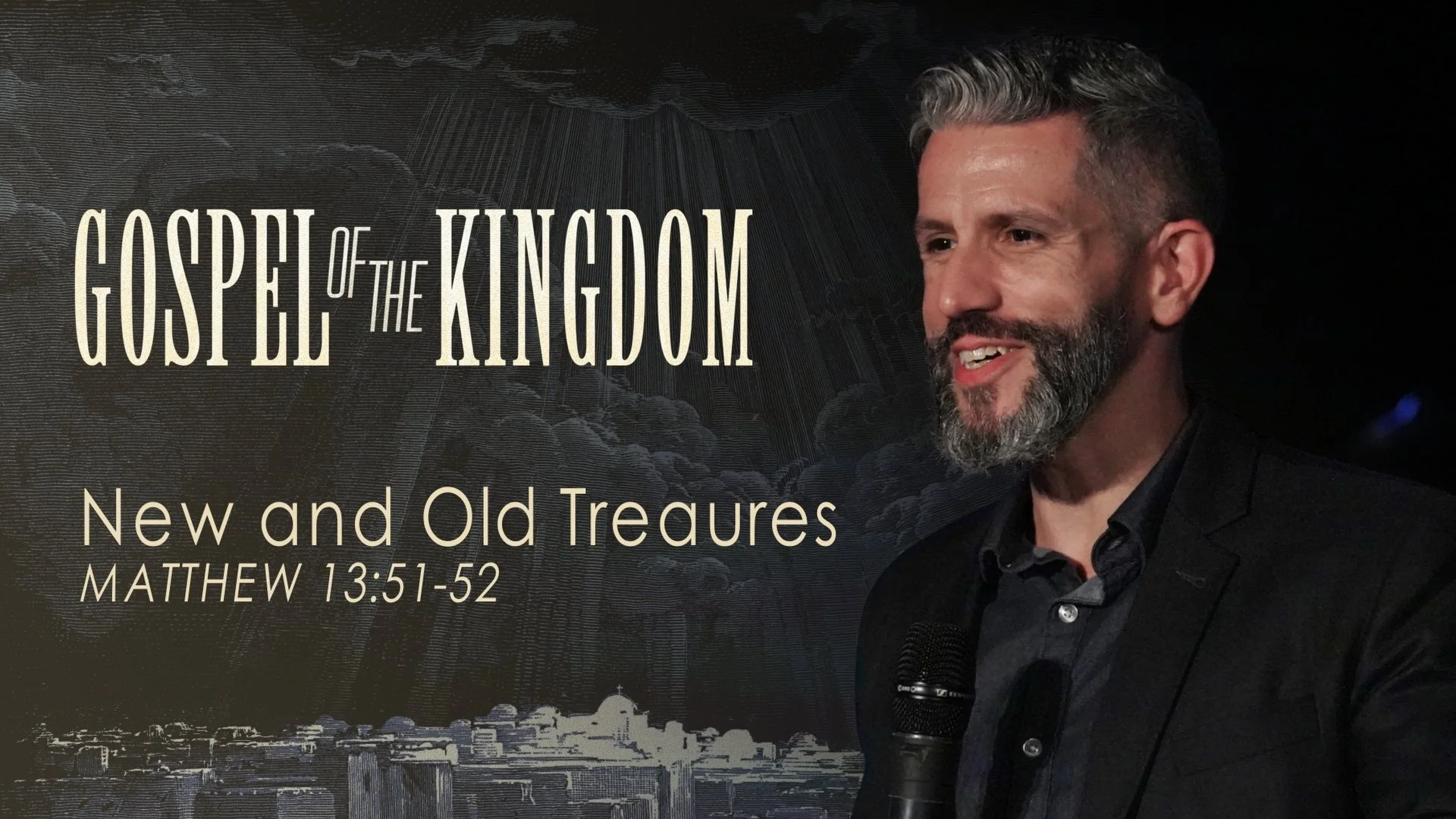
Series: The Gospel of the Kingdom
Speaker: Lead Pastor Dustin Aguilar
Scriptures: Matthew 13:51–52 | Acts 1:6–8 | Genesis 2:15–17 (Edenic Covenant) | Genesis 9:11–13 (Noahic Covenant) | Genesis 12, 13, 15, 17, & 22 (Abrahamic Covenant) | Exodus 20(Mosaic/Sinai Covenant, the Law) | Deuteronomy 29–30 (The Land/Repent and Return Covenant) | 1 Chronicles 17:11–14 (Davidic Covenant) | Jeremiah 31:27–34; Luke 22:20 | 1 Corinthians 11:25 | Hebrews 8:8, 9:15, 12:24 (The New Covenant) | Revelation 21
What We Believe:
Introduction
Amid sickness, loss, and other difficult times, Matthew 13 can bring comfort and joy.
Matthew 13 begins with the Parable of the Sower, followed by six parables describing what the Kingdom of Heaven is like (1. Weeds, 2. Mustard Seed, 3. Leaven, 4. Hidden Treasure, 5. Pearl, & 6. Net).
The parables in Matthew 13 primarily describe the waiting period between Jesus’ first coming and His second coming.
In verses 51–52, Jesus wraps up the parables He has just told.
Do the Disciples Really Understand?
Jesus asks His disciples, “Have you understood all these things?” And they reply, “Yes” (v. 51). But do they really understand?
In Acts 1:6, they ask Him, “Lord, will you at this time restore the kingdom to Israel?” This question reveals that they misunderstand the timeline of Matthew 13, since it’s been almost 2,000 years, and we’re still waiting for the Kingdom to be restored to Israel. It also shows their belief that the Kingdom would not merely be spiritual, but a real, physical kingdom on this earth, with a real throne returned to the actual Nation of Israel. Jesus does not correct their view, but answers, “It is not for you to know times or seasons that the Father has fixed by his own authority” (v. 7). Essentially, their expectation of a physical earthly kingdom is correct, even though their timing is not.
Scribes and Masters of a House
In Matthew 13, Jesus does not rebuke them for their lack of understanding; instead, he says, “Therefore every scribe who has been trained for the kingdom of heaven is like a master of a house, who brings out of his treasure what is new and what is old” (v. 52).
A scribe was well trained in the Law and responsible for interpreting and teaching it to the people. This parable is not about the Kingdom itself, but about someone trained for the Kingdom.
Jesus expects His disciples to be like scribes of the Kingdom—well-versed in the Kingdom and able to interpret and teach it to others. This will make them like masters of a house bringing out treasure.
New and Old Treasure
The treasure represents the Kingdom's teachings, both new and old.
Jesus constantly reveals new treasures by fulfilling and reinterpreting Old Testament treasures.
Why does Jesus use the word order “new and old”?
The Bible is made up of the Old Testament and the New Testament.
In our Bibles, we can also see a New Covenant and old covenants or promises.
Jesus emphasizes that the new covenant takes priority, but the old is still included and cannot be discarded.
There are 7 main covenants in the Scriptures:
Edenic Covenant – Made in the Garden of Eden with Adam and Eve. Death resulted from eating the forbidden fruit (Genesis 2:15–17).
Noahic Covenant – God made this covenant with Noah after the flood, symbolized by a rainbow. God’s unconditional promise never to judge the entire earth with water again (Genesis 9:11–13).
Abrahamic Covenant – God's unconditional promise to make Abraham a great nation that would bless the whole world (Genesis 12, 13, 15, 17, & 22).
Mosaic Covenant (Sinai Covenant, the Law) – God gave Moses the Ten Commandments on Mt. Sinai. Highly conditional (Exodus 20; Leviticus; Deuteronomy).
The Land Covenant (Repent and Return Covenant) – If the Hebrew people break the Mosaic Law, they will be driven out of the land that God gave them through the Abrahamic Covenant (Deuteronomy 29–30).
Davidic Covenant – God promises to establish David’s throne forever (1 Chronicles 17:11–14).
The New Covenant – The Law written on human hearts. Anyone can personally know God and enter into His presence (Jeremiah 31:27–34; Luke 22:20; 1 Corinthians 11:25; Hebrews 8:8, 9:15, 12:24).
The Mosaic Covenant was written on stone tablets, but the New Covenant is written on human hearts (Jer. 31:33).
Under the Mosaic Covenant, forgiveness of sins was possible through a specific system of sacrifices. On the Day of Atonement, the blood of a spotless lamb could atone for the people's sins. This is the old treasure, but there is a new treasure.
The New Covenant brings a new system of forgiveness through the blood Jesus shed. The perfect, spotless Lamb was God’s own Son.
Through Christ’s death and resurrection, He defeated death and made our resurrection into eternal life possible. We can also have a meaningful relationship with God on this side of Heaven through the Holy Spirit's presence. This is a reason to celebrate, and it is why we celebrate Communion.
Chiastic Structure
Kai was the x in the Greek alphabet, and an x is symmetrical. The top mirrors the bottom and comes together at the middle point.
What is right in the middle of chapter 13?
It explains the parable of the weeds (vv. 36–43). Good and bad seeds will grow together until the reaping. The wicked will be thrown into the fiery furnace, while “the righteous will shine like the sun in the kingdom of their Father” (vv. 42–43). This is what the whole chapter is pointing to.
The disciples did not understand this waiting period. They assumed the Messiah would come and bring the Kingdom right away. The Messiah came, but the Kingdom will come after this period, when good and evil thrive together.
Waiting Well
People like rocky soil (from the Parable of the Sower) will be excited to believe, but will fall away when they face suffering.
People like the ground among thorns will lose focus, distracted by the worries of the world and the deceitfulness of riches.
Yet those who are like good soil will hold fast to God’s promises without wavering (Matt. 13:18–23).
How to Obey:
Knowing that we have such a valuable treasure, we can be like the master of the house and share the Good News of the Kingdom with great joy.
We can take great comfort knowing that evil and suffering do not catch God off guard. We cannot completely avoid hardships or bring Heaven on earth through our faith. Relief from suffering is not a matter of faith, but timing. In God’s timing, Jesus will return to fully establish His Kingdom: “He will wipe away every tear… and death shall be no more” (Rev. 21:4a). By trusting God’s timing, we can be like good soil and hold on to faith when difficulties and distractions arise.
How to Walk Intimately with God:
Rely on the Holy Spirit's power during this time before Christ’s return. God never promises believers an easy life, but He does promise to be with us through the Holy Spirit (Acts 1:6–8).
Should we pray for healing or comfort when we're sick? Thankfully, we can pray for both healing and comfort using the following phrases as a guide:
“God, please heal…”
“God, thank you that one day all death and disease will be destroyed.”
“Our hope is in the return of Jesus and the resurrection of the dead.”